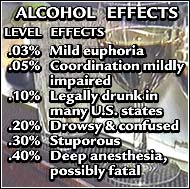
Alcoholism or alcohol abuse is an uncontrollable urge to drink alcoholic beverages.
Alcohol even with it's intoxicating properties has positive effects
Here are a few:
In the case of moderate use, alcohol has positive effects. You can get livelier, easier and relaxed. You can talk more easily and feel less tired.
According to some researchers, moderate alcohol use protects against cardiovascular diseases. This means a maximum of 2-3 glasses of wine or beer a day for men, and 1 to 2 glasses a day for women.
Socially, some people claim that it also has positive effects. It provides a lot of employment in the production, catering and retail of products and services in which alcohol plays a part. Also, people claim that alcoholic beverages helps people socialize.
But with its positive it also brings negative
Here are those:
Excessive alcohol use increases the risk of a number of diseases. examples of these are sleeping disorders, sexual problems, infection of the esophagus, infection of the stomach, infection of the pancreas, premature dementia,cancer of the mouth, throat, larynx, intestines and breasts; hypertension and heart problems. Alcohol is also damaging during pregnancy.
Alcohol plays an important role in aggression. 40% of all incidents involving aggression occur while under the influence of alcohol. The police spend 22% of their time on cases involving alcohol. Violence on the streets and domestic violence while under the influence of alcohol happen often.
with all this negatives people still get addicted to them.. the reason being happiness.. people are so addicted because alcohol helps them forget bad memories.
People with an alcohol problem who are not dependent on alcohol can often control their problem just with support from a health care provider and family or friends. They also may choose to attend meetings of Alcoholics Anonymous or another support group.
You may choose to cut down on your drinking or quit. Either way you need to look at:
your drinking patterns;
the situations that trigger your drinking;
the resulting problems; and
the pros and cons of cutting down and of quitting.
Next, decide on a drinking goal (whether it is cutting down or quitting) and ways to handle your trigger situations and other difficulties of maintaining your goal.
Treating alcoholism is a much more involved process because alcoholics need to break their dependence on alcohol and deal with a large array of problems caused by their drinking. Alcoholism can be successfully treated and managed but not cured. Abstinence is usually the goal since most alcoholics are not able to control their drinking through just cutting down.
The first step in quitting drinking for a person with alcoholism is to deal with the withdrawal symptoms. Long-term treatment can involve cognitive-behavioral therapy, support groups, and/or medication to regain health, deal with other problems caused by drinking, and maintain abstinence. Treatment needs to be tailored to the individual’s specific needs.
Also
Support groups provide an opportunity for people with alcohol problems to share experiences and support and learn from each other. Attending support group meetings reinforces the person’s commitment to recovery and can be a major help in staying sober over the long term. They also provide a chance to get to know other people in an alcohol-free environment who are trying not to drink.
There are several national self-help organizations that focus on abstinence and provide support groups throughout the United States. Each one has a different approach. Alcoholics Anonymous (AA) is the largest, oldest, and most well known of these organizations. It is based on a 12-step program for recovery. Two other groups are Secular Organizations for Sobriety (SOS) and Women for Sobriety (WFS).
Al-Anon provides support groups for family and friends of people with alcohol problems. It is associated with Alcoholics Anonymous and also based on a 12-step approach.
and 2 medications are currently approved by the U.S. Food and Drug Administration (FDA) to treat alcoholism over the long term. They are used in conjunction with other forms of treatment.
Disulfiram (Antabuse) discourages alcohol use by causing unpleasant symptoms when a person drinks alcohol while taking it. The symptoms include flushing, nausea, and vomiting. Disulfiram has not been shown to increase the rate of abstinence, but it helps some people who relapse to drink less. The potential for dangerous reactions limits its use.
Naltrexone (ReVia) decreases alcohol use by reducing the pleasurable effects of alcohol and cravings. It can be very effective, especially when used with counseling or support groups. The most common side effect is short-term nausea. High doses can cause liver damage.
Acamprosate (Campral) decreases alcohol use by reducing cravings. It may sometimes cause diarrhea. Acamprosate is currently being sold in Europe and is under review by the FDA for use in the United States.
Other medications, including antidepressants and anti-anxiety medications, are sometimes used to prevent relapse. Research is ongoing to develop new medications and refine the roles of existing ones.
for inquiries and suggestions mail me at hisairness00@yahoo.com
